Soil Amendment Calculator
Enter the area and how deep you want to spread. The row that matters is the last one: what share of the tilled layer the amendment ends up being.
Updated September 12, 2026 · Estimates for planning, not a quote
How much compost to work in
Volume is area times depth, with the depth converted from inches to feet. Spreading 2 inches over 500 square feet is 83.3 cubic feet, which is 3.09 cubic yards, or 56 bags at 1.5 cubic feet each. That bag count is why anything past a small bed is a bulk delivery.
The figure that actually matters is not the volume, it is the proportion. Two inches tilled into the top 6 inches means the worked layer ends up about a third amendment by volume, and 25 to 33 percent is the range worth aiming for. Below that you have not changed the soil much. Above it, the bed settles hard over the next year or two as the organic matter decomposes, and you finish several inches lower than you started with a soil that is now too light.
Till it in, do not layer it
Compost spread and left as a distinct band over untouched soil creates an interface. Water perches at the boundary between two materials of different texture rather than moving through, and roots stall there instead of pushing down. The result is a shallow-rooted planting sitting in a wet layer, which is precisely what amending was meant to prevent.
Spread evenly, then work it into the full tilling depth so the transition is gradual. On an established bed you cannot till without damaging roots, top-dress thinly and repeatedly instead and let the worms do it, which works but takes seasons rather than an afternoon.
What to use
Finished compost is the general answer and it improves both heavy clay and loose sand, which is unusual: it adds structure to one and water retention to the other. Uncomposted material is not a substitute. Fresh wood chips and undecomposed matter tie up nitrogen as they break down and will make a bed hungrier rather than richer for the first season.
Quality varies enormously between suppliers and there is no easy way to judge it by eye beyond smell and texture: it should smell of earth and crumble, not of ammonia or sourness. A soil test before you start is the only way to know whether what your ground needs is organic matter, a pH correction, or a specific nutrient, and it costs less than one delivery.
Related volumes
If you are filling a new raised bed rather than amending existing ground, our raised garden bed calculator handles the full fill volume and the frame lumber. For mulch over the top once planting is done, the mulch and topsoil calculator covers bags against bulk, and our landscaping cost guide prices both by bed size.
Method and sources
The target of 25 to 33 percent organic matter by volume in the worked layer is a working figure rather than one any single body publishes. Much past a third and the bed settles hard as the organic matter breaks down, which is the failure this range exists to avoid.
Volume is area times the spread depth. The figure that decides whether the bed works is the share, which is the spread depth over the tilled depth, so the page shows it. Till the amendment in rather than leaving it as a layer: a distinct interface perches water and stalls roots. Oregon State Extension publishes figures for exactly this operation in How to use compost in gardens and landscapes, EM 9308: a 3 to 4 inch layer of compost incorporated into the top 8 to 12 inches of soil for a new bed, and the same layer mixed to a depth of 6 to 8 inches before landscape plants go in. Read as share, spread over tilled, those are 25 to 50 percent and 38 to 67 percent, so the 25 to 33 percent here sits at the conservative end of what Oregon State recommends rather than above it. The up to 25 percent by volume figure sometimes quoted from the same document is a different job: it caps compost in the mix used to fill a framed raised bed, not compost worked into existing ground.
QuantiYard writes its own formulas and states them in plain language on every page. How these numbers are made covers where the constants come from, how waste factors are chosen, what these calculators deliberately do not do, and how to report an error.
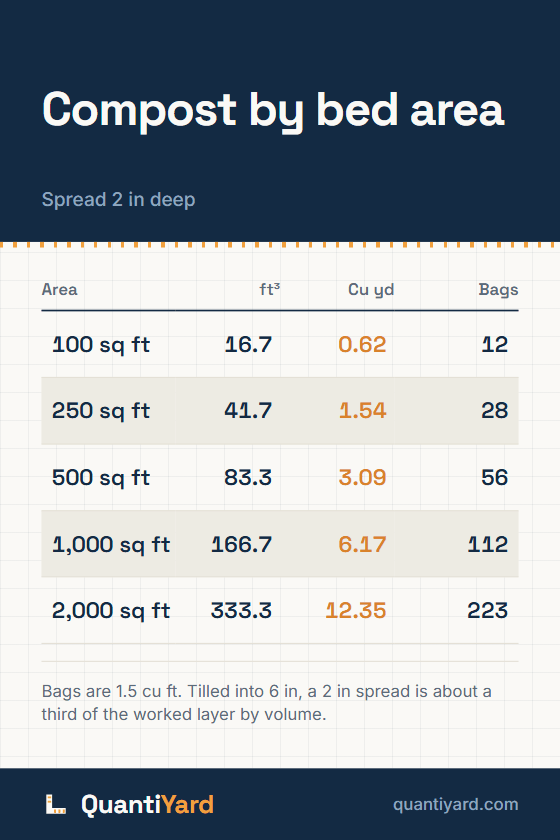
Save the compost chart
Compost for five bed sizes at a 2 in spread, in cubic feet, cubic yards and bags. Save it before you order, because bags stop making sense past about a cubic yard.
Save to PinterestOpens Pinterest with the chart and link ready to go.
Soil Amendment Calculator FAQ
How much compost do I need for a 500 square foot bed?
Spreading 2 inches over 500 square feet takes 83.3 cubic feet, which is 3.09 cubic yards or 56 bags at 1.5 cubic feet each. That bag count is the reason anything larger than a small bed is worth ordering in bulk. At 1 inch it halves to 1.54 cubic yards.
What percentage of compost should I mix into soil?
Twenty-five to 33 percent of the tilled layer by volume. Spreading 2 inches and tilling into 6 gets you to about a third, which is the usual target. Below about a quarter you have not changed the soil meaningfully. Much above a third and the bed settles hard as the organic matter decomposes, leaving you several inches lower than you started.
Should I mix compost in or leave it on top?
Mix it in on new ground. Compost left as a distinct layer over untouched soil creates an interface where water perches and roots stall, which is the opposite of what amending is for. On an established bed you cannot till without damaging roots, so top-dress thinly and repeatedly instead and let soil life work it down over a few seasons.
Cite this page
Built from this page's own title, URL and last-updated date, so a citation cannot drift from what it cites.