Sod Calculator
Enter your lawn size to get square feet of sod, the number of pieces, and how many pallets to order.
Updated September 12, 2026 · Estimates for planning, not a quote
How to estimate sod
Measure the length and width of each area you want to sod, multiply them for square feet, and add up the areas. Break an odd-shaped yard into rectangles and add a triangle or two rather than guessing one number. Then add a waste factor: 5 percent for a clean rectangle, about 10 percent for a lawn with curved beds, tree rings, or a lot of edging, since every border cut leaves an offcut you can't reuse.
Pieces and pallets
A standard sod slab is 16 by 24 inches, or 2.67 square feet. A pallet covers about 450 square feet, which is roughly 169 slabs (450 ÷ 2.67). Sod is sold by the pallet or by the piece off a partial pallet, so the calculator rounds pieces and pallets up to whole numbers. A 450 square foot pallet is 50 square yards, and published extension figures put sod at 20 to 25 pounds a square yard dry and 30 to 40 wet, so a full pallet runs about 1,000 to 2,000 pounds with a rained-on one at the top of that. Even the light end is past what a half-ton pickup should carry, so plan for a forklift or a wheelbarrow relay from the drop point.
Prep before it arrives
Only schedule delivery once the soil is graded, raked, and lightly watered. Sod goes down within a day of being cut, so order it as the last step, not the first.
Once you know the pallets, our landscaping and mulch cost guide covers what they cost delivered, how sod compares with seed per square foot, and what a lawn costs to keep up each year.
Not sure sod is the right route? Our sod vs. seed comparison itemises a 5,000 square foot lawn both ways, and covers the planting windows and watering schedules that decide it more often than price does.
Method and sources
Pallet coverage is a grower figure rather than a standard, but three university extension services publish the same starting point. Purdue Extension puts one pallet at about 50 square yards, which is 450 square feet. Mississippi State Extension says a pallet typically contains 450 to 500 square feet. Virginia Cooperative Extension gives 450 to 700 and describes a standard rolled piece as approximately 10 square feet, which is the 2 by 5 foot roll this page uses. The delivery ticket is still the authority. Slab size is the figure that does not line up: this page uses 16 by 24 inches, and Purdue says slabs are typically 18 by 24 and vary with the cutting machine, so measure a piece rather than trusting either. The waste allowances are the installer figures, 5 percent on a rectangle and 10 on an irregular lawn, and the Purdue worked example adds a flat 10 for miscalculations and waste.
Area times a waste factor, divided by the piece size. Sod has to go down within about 24 hours of being cut, so ordering short and going back is worse here than on almost anything else the site calculates. Ask your farm for their pallet coverage before you order. On weight, the page now uses the extension figures rather than the 2,000 to 3,000 lb it used to quote, which none of the three supports: Purdue puts sod at 35 to 40 lb a square yard, Virginia at 20 to 25 dry and 30 to 40 wet, and Mississippi State says a 450 square foot pallet may weigh as much as a ton. Fifty square yards to a pallet makes that about 1,000 to 2,000 lb, wet at the top.
QuantiYard writes its own formulas and states them in plain language on every page. How these numbers are made covers where the constants come from, how waste factors are chosen, what these calculators deliberately do not do, and how to report an error.
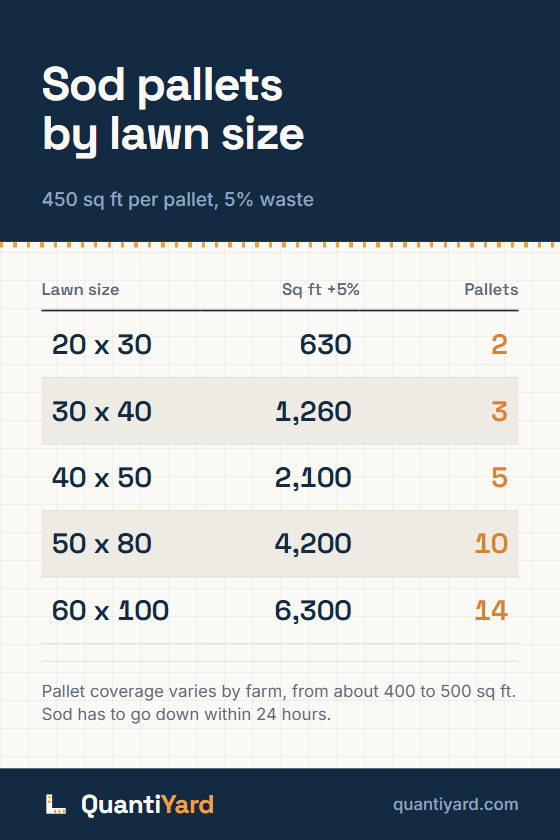
Save the sod chart
Square footage and pallet counts for five lawn sizes at 5 percent waste. Save it and order sod for the day you can lay it.
Save to PinterestOpens Pinterest with the chart and link ready to go.
Sod FAQ
How much sod is on a pallet?
A pallet covers about 450 square feet, roughly 169 standard 16-by-24-inch slabs. Coverage runs from about 400 to 500 square feet depending on the farm and piece size, so confirm with your supplier before ordering.
How much extra sod should I order?
Add 5 percent for a square or rectangular lawn and about 10 percent for an irregular yard with curves, islands, or lots of edging. The waste covers border cuts and pieces that don't seat well.
How soon do I need to lay sod after delivery?
Within 24 hours, and the same day in hot weather. It is live grass stacked on a pallet, so it heats up and yellows fast. Order it only when the ground is prepped and you can install right away.
Cite this page
Built from this page's own title, URL and last-updated date, so a citation cannot drift from what it cites.