Mulch & Topsoil Calculator
Enter your bed area and depth to get cubic yards for bulk delivery or the number of bags, for mulch, topsoil, or garden soil.
Updated October 2, 2026 · Estimates for planning, not a quote
How to estimate mulch and topsoil
Multiply the bed's length, width, and depth, all in feet, to get cubic feet, then divide by 27 for cubic yards. Depth is the number that changes most by project: a fresh mulch bed usually wants 2–4 inches, while topsoil for filling or leveling a lawn area can run much deeper depending on the grade change.
Bags or bulk?
For small beds, bagged material is easiest, with no leftover pile to deal with. Whether bulk is cheaper depends on the bag price rather than a set volume: bulk wins when a bag costs more than the yard price plus the delivery fee spread over the order, divided by 14, since a yard takes 14 of the 2 cubic foot bags. The more yards share one delivery fee, the lower that break-even bag price falls.
Volume is half the question and price is the other half. Our landscaping and mulch cost guide prices bulk against bagged for five common bed sizes, and shows where the delivery fee moves the crossover.
Still deciding between bark and stone? Our mulch vs. rock comparison runs the ten-year cost of a 500 square foot bed both ways, finds the crossover at year 2, and then explains why that is not what should decide it.
Method and sources
The bag sizes are the retail package sizes these products are sold in: 2 cubic feet for bark mulch, 1.5 for garden soil, 0.75 for topsoil. Retailers stock those sizes and print the volume on the bag, which is the figure to trust over this one when they differ. Depth is published, and the published figures do not agree with each other. University of Minnesota Extension says to apply mulch 2 to 4 inches deep to balance weed suppression with adequate soil aeration. CMG GardenNotes #245 from Colorado State University Extension, reviewed April 2023, says wood chip, gravel and other mulch should be four inches deep to suppress weeds. Mulches for Home Gardens and Plantings from University of Wisconsin horticulture says to apply most organic mulches 3 inches deep over the soil. The 2 to 4 inches this page suggests for a fresh bed matches Minnesota exactly and contains the other two figures. Minnesota and Colorado State both add that mulch belongs back from a tree trunk rather than piled against it.
Volume is area times depth divided by 27. The comparison the page exists for is bags against a bulk yard, and a cubic yard is 13.5 of the 2 cubic foot bags, which is usually the moment bulk delivery starts winning.
QuantiYard writes its own formulas and states them in plain language on every page. How these numbers are made covers where the constants come from, how waste factors are chosen, what these calculators deliberately do not do, and how to report an error.
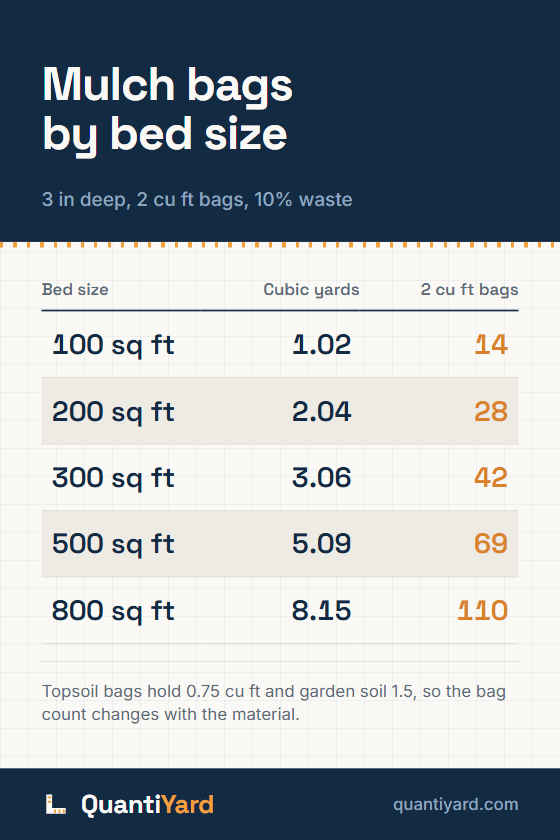
Save the mulch chart
Bags and cubic yards for five bed sizes at 3 inches deep. Save it to your garden board before the spring order goes in.
Save to PinterestOpens Pinterest with the chart and link ready to go.
Mulch & topsoil FAQ
How deep should mulch be applied?
Most garden beds need 2 to 4 inches. Less doesn't suppress weeds well; more than 4 inches can smother roots and trap moisture against the stem.
How many bags of mulch equal a cubic yard?
A standard 2 cubic foot bag is the most common size, and it takes about 13.5 bags to equal one cubic yard (27 cubic feet).
Is bulk or bagged mulch cheaper?
It depends on the bag price, not a set volume. Bulk wins when a bag costs more than the yard price plus the delivery fee spread over the order, divided by 14, the number of 2 cubic foot bags in a yard. For small beds, bags are more convenient and leave nothing over.
Cite this page
Built from this page's own title, URL and last-updated date, so a citation cannot drift from what it cites.