Raised Garden Bed Calculator
Enter your bed size to get the soil in cubic feet, yards and bags, and the lumber the frame takes.
Updated September 7, 2026 · Estimates for planning, not a quote
How much soil a raised bed takes
Length times width times height, and the only trick is the units: height is in inches and everything else is in feet, so the height has to be divided by twelve before it multiplies. A 4 by 8 foot bed 12 inches deep is 32 cubic feet, which is 1.19 cubic yards and 22 bags of garden soil at 1.5 cubic feet a bag.
That bag count is the number worth looking at twice. Twenty-two bags is a full trolley and most of a car boot, and it is only one bed. Two beds is 44. Past about a cubic yard, bulk delivery is almost always cheaper and very much easier, and our mulch and topsoil calculator covers the bulk against bagged crossover in more detail.
What to fill it with
Volume is the easy half. A bed filled with straight topsoil compacts into a brick by the second season, because there is nothing in it holding structure. A mix of roughly one third compost, one third topsoil and one third aeration material, which can be coarse bark, perlite or coir, drains properly and stays loose. Buy the volume as a mix if the yard sells one, or as three separate deliveries if not.
Beds settle. Expect the level to drop an inch or two over the first season as the organic matter breaks down, and plan to top up each spring. That is a feature rather than a fault: the material that vanished became soil.
The frame
Frame lumber is the perimeter times the number of courses. Courses round up, so a 12 inch bed built from 2x6 boards takes three courses at 5.5 inches each and stands 16.5 inches rather than 12. Building it from 2x12 instead takes one course and one cut per side. Both work; the wider board costs more per foot and saves labour.
A 4 by 8 bed is 24 feet around, so three courses of 2x6 is 72 linear feet of board. If you are pricing the lumber, our board foot calculator converts linear feet into the board feet hardwood and rough lumber are actually quoted in.
Depth
Six inches suits lettuce and herbs. Twelve is the general answer and handles most vegetables. Root crops such as carrots and parsnips want 18, and if the bed sits on a hard surface rather than soil, add the depth those roots would otherwise have found underneath.
Method and sources
Soil volume is length times width times depth, and a cubic yard is 27 cubic feet. Both are definitions, so there is nothing here to cite.
Courses round up, so a 12 inch bed on nominal 1x6 board is three courses standing a little proud rather than a bed two inches short. Board footage is the perimeter times the number of courses. The bag count uses the 1.5 cubic foot garden soil bag, which is the retail package size and is printed on the bag you are buying.
QuantiYard writes its own formulas and states them in plain language on every page. How these numbers are made covers where the constants come from, how waste factors are chosen, what these calculators deliberately do not do, and how to report an error.
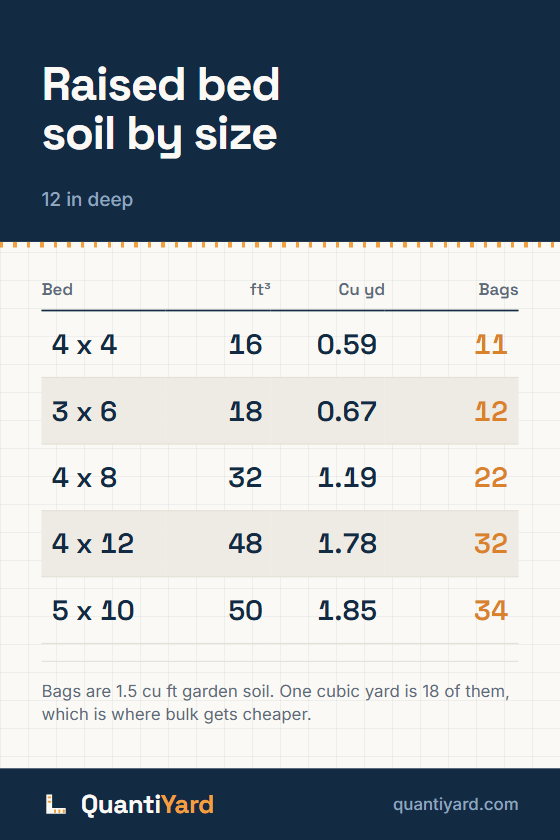
Save the raised bed soil chart
Soil volume and bag counts for five common bed sizes at 12 in deep. Save it before you buy, because the bag count is what sends most people to bulk.
Save to PinterestOpens Pinterest with the chart and link ready to go.
Raised Garden Bed Calculator FAQ
How much soil do I need for a 4 by 8 raised bed?
Thirty-two cubic feet for a 12 inch deep bed, which is 1.19 cubic yards or 22 bags of garden soil at 1.5 cubic feet each. At 6 inches deep it halves to 16 cubic feet and 11 bags. Past about a cubic yard, bulk delivery is usually cheaper than bags and considerably less carrying.
How deep should a raised garden bed be?
Twelve inches suits most vegetables and is the usual answer. Six inches is enough for lettuce, herbs and other shallow-rooted crops. Root vegetables like carrots and parsnips want 18 inches. If the bed sits on concrete or another hard surface rather than open soil, build in the depth the roots would otherwise have found below it.
Can I fill a raised bed with just topsoil?
You can, and it compacts. Straight topsoil in a bed loses its structure within a season or two and drains poorly. A mix of roughly one third compost, one third topsoil and one third aeration material such as coarse bark or perlite stays loose and drains. Expect any mix to settle an inch or two in the first year as the organic matter breaks down.
Cite this page
Built from this page's own title, URL and last-updated date, so a citation cannot drift from what it cites.